When the AGM Falls Apart: Why Quorum Fails at Thai Condos and How to Fix It
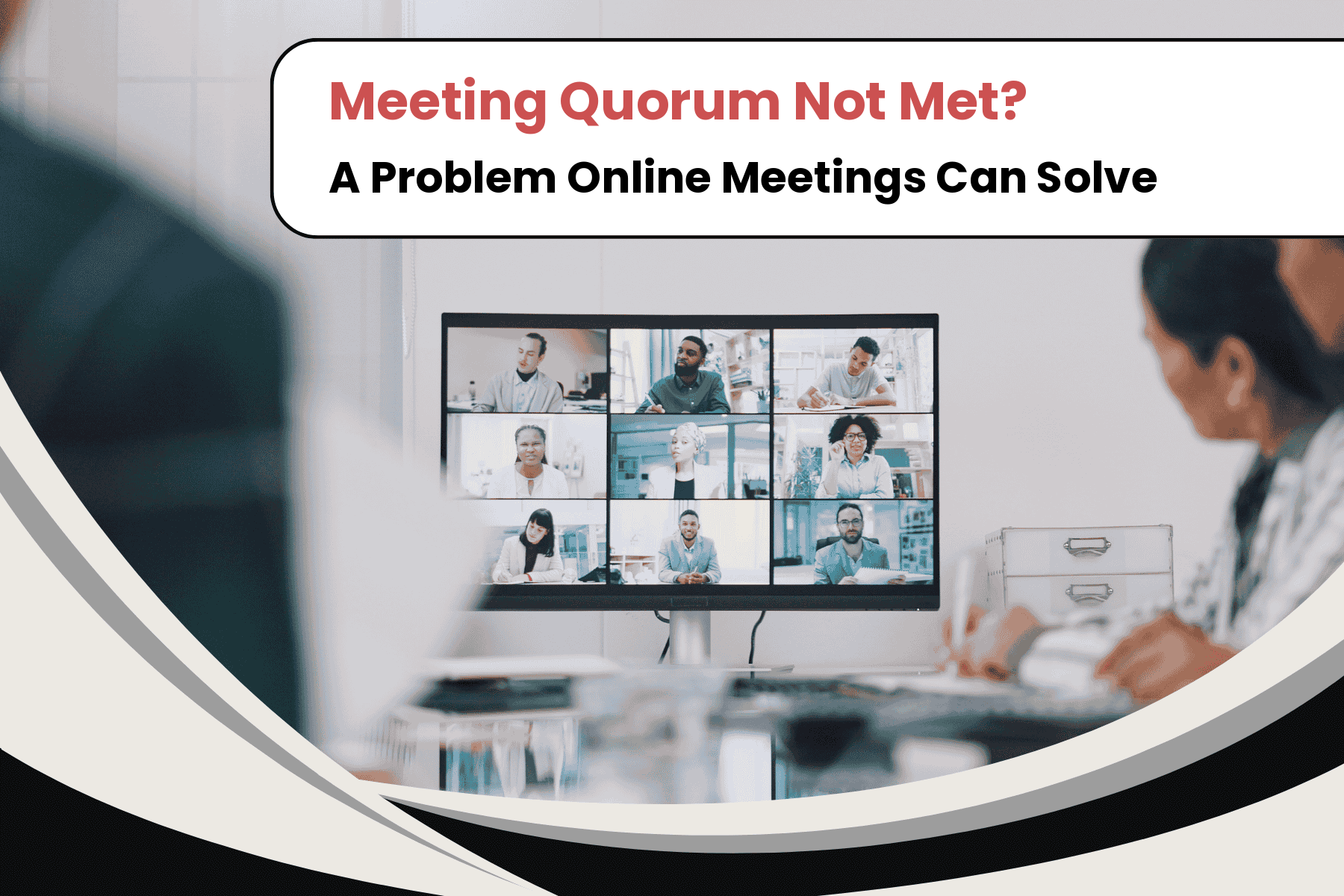
Every year, juristic persons running condominiums and housing estates have to organize at least one annual general meeting. The agenda is usually packed: budget approvals, committee elections, decisions on common area fees. Then the day comes and not enough unit owners show up. Everything grinds to a halt and the whole process has to start over.
This doesn't happen because residents don't care about where they live. It happens because the traditional meeting format has a structural problem that no amount of reminder notices can solve.
What Is a Quorum and What Does Thai Law Require

A quorum is the minimum number of co-owners that must be present for any vote to be legally valid. Under the Condominium Act, a quorum for the annual general meeting requires co-owners representing at least one quarter of all voting rights to attend.
If that threshold isn't met on the first attempt, the law allows the meeting to be postponed by 15 days and rescheduled. The second attempt has no minimum quorum requirement. That sounds like a workable backup plan, but in practice it means reprinting and resending invitations, rebooking a venue, and coordinating every stakeholder from scratch. For most juristic management offices, it's a headache they'd rather not repeat.
- Specific legal requirements may vary depending on the type of juristic entity. Consult a qualified property law professional for guidance on your situation.
Why Quorum Problems Keep Happening
The reasons unit owners don't show up aren't complicated. Many condominiums in Bangkok were bought as investment properties and rented out, meaning the actual owner may live in another province or abroad. Travelling back for a single meeting often isn't worth the cost. Some owners receive the invitation but can't make it due to work commitments. Others simply assume their absence won't change anything.
The consequences go well beyond a delayed meeting. When key agenda items can't be voted on, the effects ripple through the entire year of operations. Maintenance work can't begin without an approved budget. A committee that hasn't been properly re-elected lacks a clear legal mandate for major decisions. In some cases, the previous committee continues operating past the end of its term, which creates uncertainty for both residents and the juristic office.
Does a Proxy Vote Help
A proxy is a legal arrangement where a co-owner who can't attend authorizes someone else to vote on their behalf. Proxy holders count toward the quorum, so if enough proxies are collected in advance, the meeting can proceed.
The problem is the paper-based process. It involves printing forms, filling them in, finding a witness, and physically returning the documents to the juristic office before the meeting date. Each step is a chance for the owner to lose track of it or simply not bother. Some developments try to compensate by having staff call residents room by room, which takes significant time and still produces inconsistent results.
What Is an E-AGM
An E-AGM is an annual general meeting held through an electronic medium, where co-owners join from wherever they are using any internet-connected device. This format is legally recognized under the Emergency Decree on Electronic Meetings B.E. 2563, which permits both public and private organizations to hold meetings online as long as they meet the required technical and procedural standards.
Data from the Stock Exchange of Thailand for 2023 shows that 577 out of 753 listed companies, roughly 77 percent, held their AGM fully online that year. Another 7 percent used a hybrid format combining in-person and online participation. While these figures come from publicly listed companies, the same emergency decree applies to condominium and housing estate juristic persons.
How Silverman FoQus Addresses the Quorum Problem

Silverman FoQus is an E-AGM platform developed in partnership with Quidlab, which is legally certified under Thai law. It supports annual general meetings for both condominium and housing estate juristic persons, and it directly addresses the three main reasons quorum fails.
Attend from Anywhere, No App Download Required
Participants join by opening a link in their browser on any device. There's nothing to install. An owner living in Chiang Mai or overseas joins the same meeting as someone sitting in their unit downstairs. The platform supports up to 10,000 concurrent participants, which covers any residential development regardless of size.
Submit a Proxy Through the Silverman App
Instead of printing and returning paper forms, co-owners submit their proxy digitally through the app. This removes the friction that causes most people to skip it. The juristic office can also track proxy submissions as they come in, rather than counting through a stack of papers the night before the meeting.
Live Vote Counting with a Full Audit Log
Results appear immediately after voting closes. The system records a complete log that meets the requirements set out in the emergency decree, including support for both open and secret ballots depending on what each agenda item requires. There's no margin for error in the count, and everything is available for review afterwards.
What the Law Requires and Whether FoQus Covers It
According to the Electronic Transactions Development Agency (ETDA) guidelines for electronic meetings, platforms must meet information security standards covering data encryption, identity verification, and the recording of audio and video as legal evidence. The five core requirements are identity verification before entry, audio and video communication throughout the meeting, document access for all participants, voting in both open and secret formats, and a complete recording with electronic traffic logs. Platforms must also comply with ISO/IEC 27001 cybersecurity standards.
Silverman FoQus meets all of these requirements. Participants go through identity verification before joining, votes are recorded with full logs, video is captured for the entire session except during closed deliberations, and the juristic office has dedicated support staff available throughout the meeting to handle any issues that come up mid-session.
The Bigger Picture
Quorum failures keep happening because the traditional meeting format asks too much of people who have legitimate reasons not to show up. Moving to an online format doesn't solve every problem a juristic office faces, but it removes the main barriers that turn an otherwise manageable meeting into a repeated logistical failure.
For developments considering the switch, having the meeting platform connected to the same system used for day-to-day management covers billing, resident records, and maintenance requests in one place. This means less coordination between separate tools and fewer chances for information to fall through the gaps. Silverman FoQus handles invitations, proxy collection, voting, and result recording within the same platform the juristic office already uses to run the building.


Download Application


Contact us for more information


Add-On services
- E-meeting (e-AGM)
- Visitor Control Management and Parking lot control
- Security Systems and License Plate Recognition (LPR)
- AI Facial Recognition & Access Control Management System
- Automatic Debt Collection System and Legal Services
- Incorporation services and project assignments
- Accounting As A Service
- Audit As A Service
Connect with us
- Management & Accounting program
- E-meeting (e-AGM) and E-vote
-



Member of


Certified by


Awarded by
Accounting and Finance
Juristic Person Management
Property Management Services
Accounting Software for Juristic
Management Software for Juristic
Read More