ประโยชน์หลัก ๆ คือการยกระดับด้านความปลอดภัย และ ความสะดวกรวดเร็ว เพราะมีการบันทึกข้อมูลการเข้า-ออกของยานพาหนะทั้งหมดอย่างละเอียดและแม่นยำ รวมถึงช่วยอำนวยความสะดวกให้กับลูกบ้าน/ผู้ที่ได้รับอนุญาต โดยระบบสามารถเปิดไม้กั้นให้เข้า-ออกได้โดยอัตโนมัติโดยไม่ต้องใช้บัตรหรือสแกนลายนิ้วมือ ทำให้การจราจรไหลลื่นขึ้นไม่ว่าจะเป็นคอนโดมิเนียมหรือหมู่บ้านจัดสรร และช่วยป้องกันการถูกสวมสิทธิ์จากสติ๊กเกอร์ปลอม หรือ คีย์การ์ดที่ปลอมแปลง ซึ่งมาจากการควบคุมรถเข้า-ออกโดยคนทำงานในโครงการ หรือ นิติบุคคล
How Does a License Plate Recognition (LPR) System Work?
4 August 2026
Written by:SILVERMAN
What Is a License Plate Recognition (LPR) Camera? What Are Its Benefits?
Nowadays, technology in every field is advancing by leaps and bounds, and security is no exception. Most people are already familiar with CCTV cameras installed to record footage of various events, but today another cutting-edge innovation deserves recognition: the license plate reading camera, or LPR camera. For anyone wondering what an LPR system, or License Plate Recognition camera, actually is and how useful it can be, let's explore the details together.
What Is a License Plate Recognition (LPR) Camera?
A license plate reading camera, or LPR camera, is a type of CCTV camera developed primarily to function as a license plate reading program. It works together with computer software for analysis and an automatic entry-exit barrier system to read license plates and open/close the entry and exit gates of housing estates as well as various buildings, greatly improving convenience, speed, and security. It can read and record data for both cars and motorcycles, covering standard white plates with black characters, auction plates, red plates, yellow plates, and green plates, as long as they were issued by the Department of Land Transport. This license plate reading camera can operate with an accuracy level of 95-98%.
How Does a License Plate Recognition (LPR) System Work?
The license plate recognition camera system, or LPR, stands for License Plate Recognition, meaning a camera that reads vehicle license plates. It is another highly interesting technology. The way the LPR system, or license plate detection system, works is as follows: when a car or motorcycle drives up in front of the entry-exit barrier, the camera automatically captures an image of the vehicle and identifies the position of the license plate, then forwards it to the installed program for analysis, evaluation, and data extraction using Optical Character
Recognition (OCR) technology, which is a system for recognizing characters through light, converting them into numbers, categories, letters, and province, right down to the vehicle's make and color. This greatly facilitates the use of vehicle entry-exit data for other purposes as well.
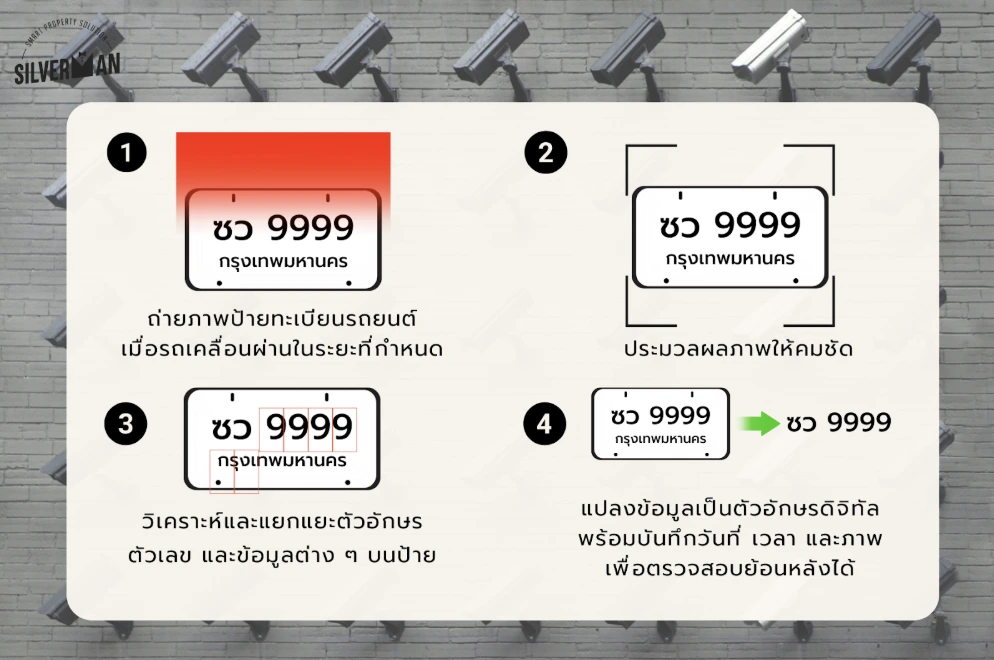 In cases where the camera works together with the entry-exit barrier, once the license plate reading program has finished analyzing, evaluating, and extracting the data, the barrier will be raised immediately, within no more than 3-5 seconds. However, this system usually requires the vehicle to be pre-registered with the project or the security service provider in question, such as being a resident of the housing estate or an employee working in the office building. Visitors go through the same system as well.
In addition, here is a bit more information about using the LPR license plate detection system. In cases where the camera encounters a license plate that is faded, peeling, damaged, or has numbers or letters that are not visible, has gold plating or stickers covering it, or uses a counterfeit plate that was not legally issued by the Department of Land Transport, the camera will not be able to read that license plate.
What Are the Benefits of a License Plate Recognition (LPR) Camera?
 Now that you know how a license plate detection camera system works, let's summarize the great benefits that everyone gains from choosing to use an LPR camera, making it easier to decide whether to install one for your own project or to choose a property management company whose services include an LPR system. Let's take a look.
1. Convenience for everyone involved
- A license plate reading camera creates convenience for both vehicle drivers and security staff by being a fully automated system. Analysis, evaluation, and approval of data take no more than 5 seconds, and the driver can simply continue driving through. This means staff no longer need to bother exchanging cards or manually raising the entry barrier.
2. Greatly enhances security for the location
- A license plate reading camera helps raise the level of security for a given area, especially in places that require a high degree of privacy, such as housing estates and condominiums, because only vehicles that have been specifically registered are allowed through. In addition, if the camera detects a fake license plate or plate cloning, it will issue an alert and will not allow that vehicle to pass.
3. Recorded data can be used for other purposes
- The data captured by the license plate reading camera, or LPR, can also be used for other purposes, such as serving as evidence for police officers, or as statistics indicating peak periods of vehicle entry and exit so that more staff can be scheduled during those shifts. Users can also download this data as an Excel file or a PDF file.
4. Usable at all times, with high accuracy
- An LPR camera can be used at all hours, both day and night, thanks to its WDR lens, which effectively enhances image clarity, as well as its ability to see through headlights and taillights, ensuring clear recording in every situation regardless of the time of day. On top of that, its clarity and accuracy level remain very high, averaging 95-98%.
5. Can be used together with other devices
- Besides functioning as a camera for detecting license plates, a license plate reading camera can also work together with other devices, further enhancing modernity, convenience, and speed. Examples include entry-exit barriers (as described above), parking fee calculation systems, and parking duration recording systems.
How Should a License Plate Recognition (LPR) Camera Be Installed, and What Locations Is It Suitable For?
For anyone interested in installing a license plate reading CCTV camera, these days LPR cameras are not expensive at all. You can choose a quality brand, such as the Hikvision license plate reading camera, for excellent performance. That said, here are the key principles for installation.
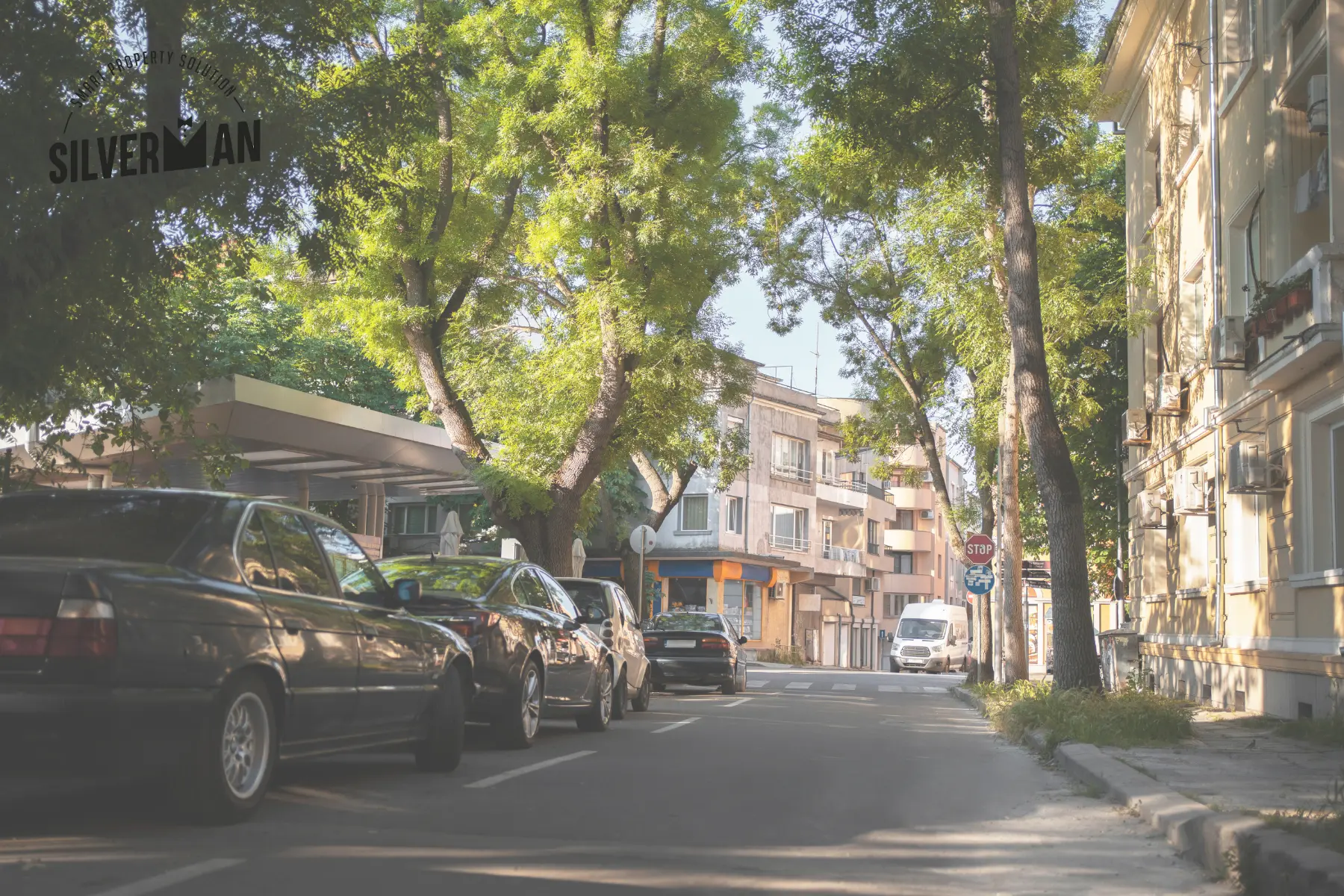 Mount the camera at a level where the license plate and the entire vehicle can be clearly seen
- In case the driver's face needs to be used as evidence, or other additional vehicle details such as make, model, and color are needed, this camera height will help capture complete data on every vehicle excellently.
Connect the system to the security guard booth so staff can provide additional oversight
- In the event of something unexpected, such as the camera being unable to read a faded license plate, security staff can manually open or close the entry-exit barrier to keep things moving, or check that vehicle for anything unusual.
Always install it in front of the barrier, on the side the vehicle will pass through
- Nothing should ever be allowed to obstruct the camera's range, to ensure that images are captured accurately and precisely, preventing problems or incorrect data recording later on.
Many people may still have further questions about what kinds of locations this license plate reading camera should be installed at. Simply put, it can be installed at virtually any location with parking, whether that's a condominium, housing estate, hotel, mall, hospital, government office, office building, private parking lot, factory, or other locations, as long as there is a parking area or a clearly supervised parking spot.
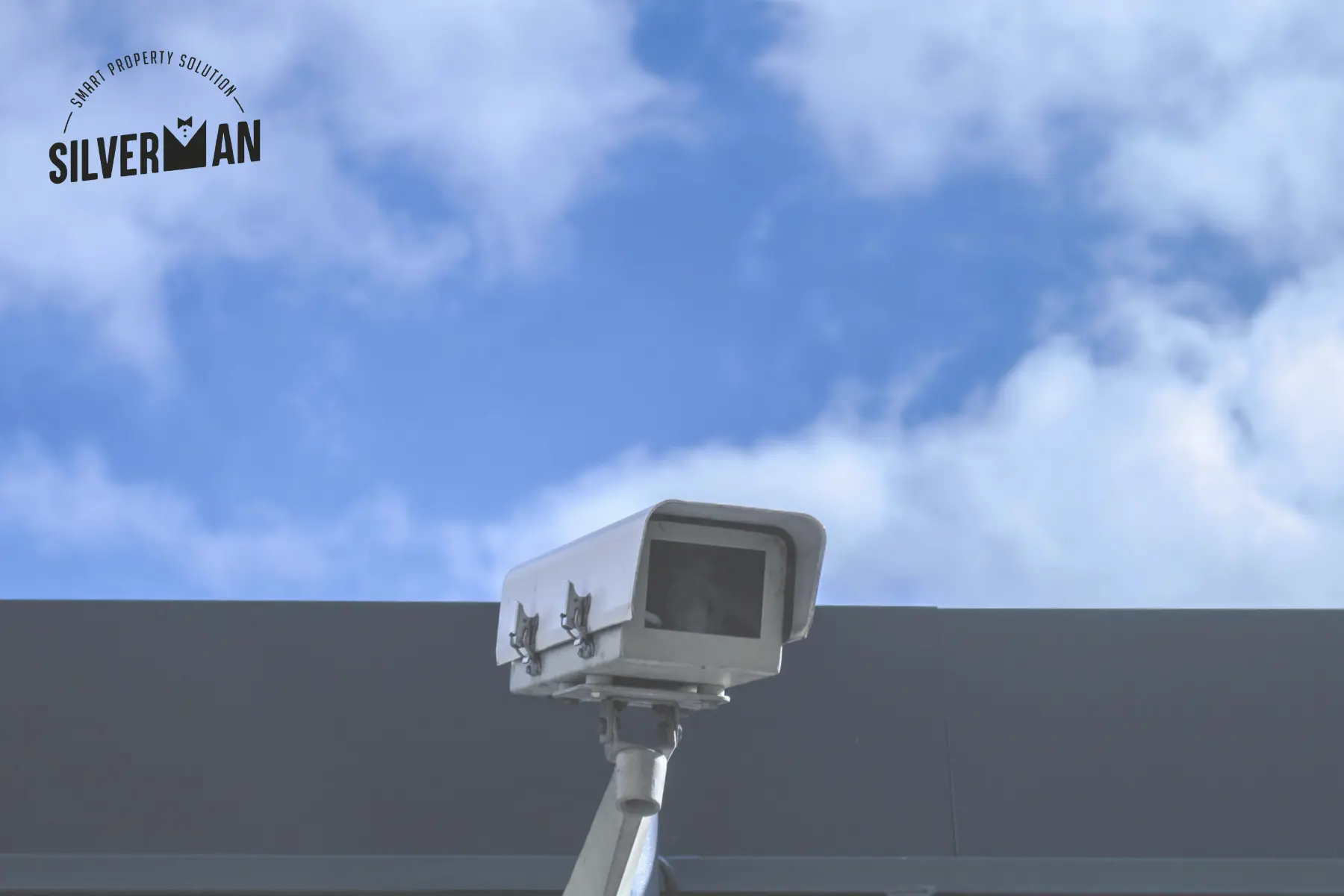 An LPR system, or license plate reading camera system, is a technology that can capture the license plate image of every vehicle passing through a designated area and store the data for later verification. Nowadays, license plate reading cameras are very affordably priced and are not difficult to install.
If you're interested in a visitor management system paired with automatic vehicle entry-exit control through an AI-powered license plate reading system, and effective LPR technology, we're happy to help with our professional team. Silverman's LPR camera delivers high accuracy and supports every type of Thai license plate, including white plates with black characters, white plates with blue characters, red plates, and more. It works quickly and performs well in all lighting conditions, day or night. Silverman is ready to serve every type of property, from housing estates and condominiums to hotels, shopping malls, hospitals, state enterprises, and government offices. Contact our experts today
Frequently Asked Questions
LPR เป็นกล้องประเภทหนึ่งที่ถูกพัฒนาขึ้นมาโดยเฉพาะเพื่อใช้เป็นโปรแกรมอ่านและจดจำป้ายทะเบียนรถเป็นหลัก ต่างจากกล้องวงจรปิดทั่วไปที่เน้นการบันทึกภาพเหตุการณ์โดยรวม โดยกล้อง LPR จะทำงานร่วมกับซอฟต์แวร์คอมพิวเตอร์และระบบไม้กั้นทางเข้า-ออกอัตโนมัติ เพื่อประเมินผลและควบคุมการเข้า-ออกอาคารหรือหมู่บ้านจัดสรรโดยเฉพาะ
กล้องอ่านป้ายทะเบียน LPR ถูกออกแบบมาให้รองรับการอ่านและบันทึกข้อมูลป้ายทะเบียนรถยนต์และรถจักรยานยนต์ที่ออกโดยกรมขนส่งทางบกได้หลากหลายประเภท ได้แก่ ป้ายขาวอักษรดำปกติ ป้ายประมูล ป้ายแดง ป้ายเหลือง ป้ายเขียว
ตัวกล้องจะดำเนินการถ่ายภาพรถ พร้อมระบุตำแหน่งทะเบียนรถโดยอัตโนมัติ จากนั้นจะส่งภาพไปยังโปรแกรมเพื่อวิเคราะห์และถอดข้อมูลป้ายทะเบียน
- หากเป็นรถที่ลงทะเบียนไว้ ระบบจะตรวจสอบข้อมูลและสั่งการให้ไม้กั้น เปิดโดยอัตโนมัติ
- หากเป็นผู้มาติดต่อ ระบบจะบันทึกข้อมูลการเข้า-ออก และนำข้อมูลไปใช้งานต่อได้ทันที
หลังติดตั้ง ทีมวิศวกรจะสอนวิธีการเปิดแบบ Manual ให้กับเจ้าหน้าที่หน้างานไว้ เพื่อให้รถเข้าออกได้ตามปกติเมื่อไฟฟ้าดับ ส่วนกล้อง LPR (ระบบอ่านป้ายทะเบียน) ยังคงทำงานและบันทึกข้อมูลทะเบียนรถทุกคันที่ผ่านเข้าออกไว้ในหน่วยความจำของระบบตามปกติ และเมื่อไฟฟ้ากลับมา ระบบส่วนหน้าจะทำการดึงข้อมูลทะเบียนรถที่บันทึกไว้ในช่วงที่ไฟดับนั้น กลับมาแสดงผลให้เจ้าหน้าที่หน้างานเห็นบนหน้าจออีกครั้ง เพื่อให้ตรวจสอบข้อมูลการเข้า-ออกย้อนหลังได้อย่างสมบูรณ์
ในทางการใช้งาน เพื่อให้เกิดความสมบูรณ์สูงสุดในการอ่านป้ายทะเบียนรถ ควรติดตั้งกล้อง LPR ควบคู่กับไม้กั้นทางเข้า-ออกเสมอ เพื่อให้ทำงานและเกิดประสิทธิภาพสูงสุดในการอ่านป้ายทะเบียนครับ อย่างไรก็ตาม ในทางของระบบ Silverman
- ไม้กั้นใหม่ (ติดตั้งไม่เกิน 1 ปี): ลูกค้าสามารถเลือกซื้อเฉพาะกล้อง LPR อย่างเดียวได้ครับ
- ไม้กั้นเก่า (ติดตั้งเกิน 1 ปี): แนะนำให้ลูกค้าเลือกซื้อ แพ็คเกจใหม่ที่มีทั้ง กล้อง LPR และไม้กั้นทางเข้า-ออกชุดใหม่ เพื่อให้มั่นใจในความเสถียรและการทำงานร่วมกันของระบบโดยรวมครับ
สามารถกรอกฟอร์มเพื่อปรึกษาเราฟรีได้บนเว็บไซต์นี้เลยครับ หรือ ส่งอีเมลมาได้ที่ [email protected] หรือ โทร. 08-1442-6888, 06-5579-6844 เจ้าหน้าที่ของเรายินดีตอบคำถามและให้บริการอย่างเต็มที่



Download Application


Contact us for more information


Add-On services
- E-meeting (e-AGM)
- Visitor Control Management and Parking lot control
- Security Systems and License Plate Recognition (LPR)
- AI Facial Recognition & Access Control Management System
- Automatic Debt Collection System and Legal Services
- Incorporation services and project assignments
- Accounting As A Service
- Audit As A Service
Connect with us
- Management & Accounting program
- E-meeting (e-AGM) and E-vote
-



Member of


Certified by


Awarded by

Accounting and Finance
Financial Statements of Jurisric PersonBalance sheet of Jurisric PersonIncome - Expense statement of Jurisric Person
Read MoreJuristic Person Management
Juristic Person CommitteeCondominium Juristic Person CommitteeHousing Estate Juristic Person Committee
Read MoreProperty Management Services
Condominium Juristic Person Property Management CompanyHousing Estate Juristic Person Property Management CompanyJuristic Person Work Property Management Company
Read MoreAccounting Software for Juristic
Juristic Person Accounting ProgramCondominium Juristic Person Accounting ProgramHousing Estate Juristic Person Accounting Program
Read MoreManagement Software for Juristic
Read More