How Secure Are Key Cards? Tips to Prevent Key Card Cloning
How Secure Are Key Cards? Tips to Prevent Key Card Cloning
Everyone can take basic steps to protect their own safety, including setting up door lock systems to prevent outsiders from entering or leaving a home or room without permission. Nowadays, the "key card" is a popular choice, whether for use in one's own residence, or in the many hotel key cards, resorts, offices, room key cards, condo key cards, and countless other locations. A question many people naturally wonder is just how secure are door key cards, and what should be done if cloning occurs? Let's find out.
What is a key card?
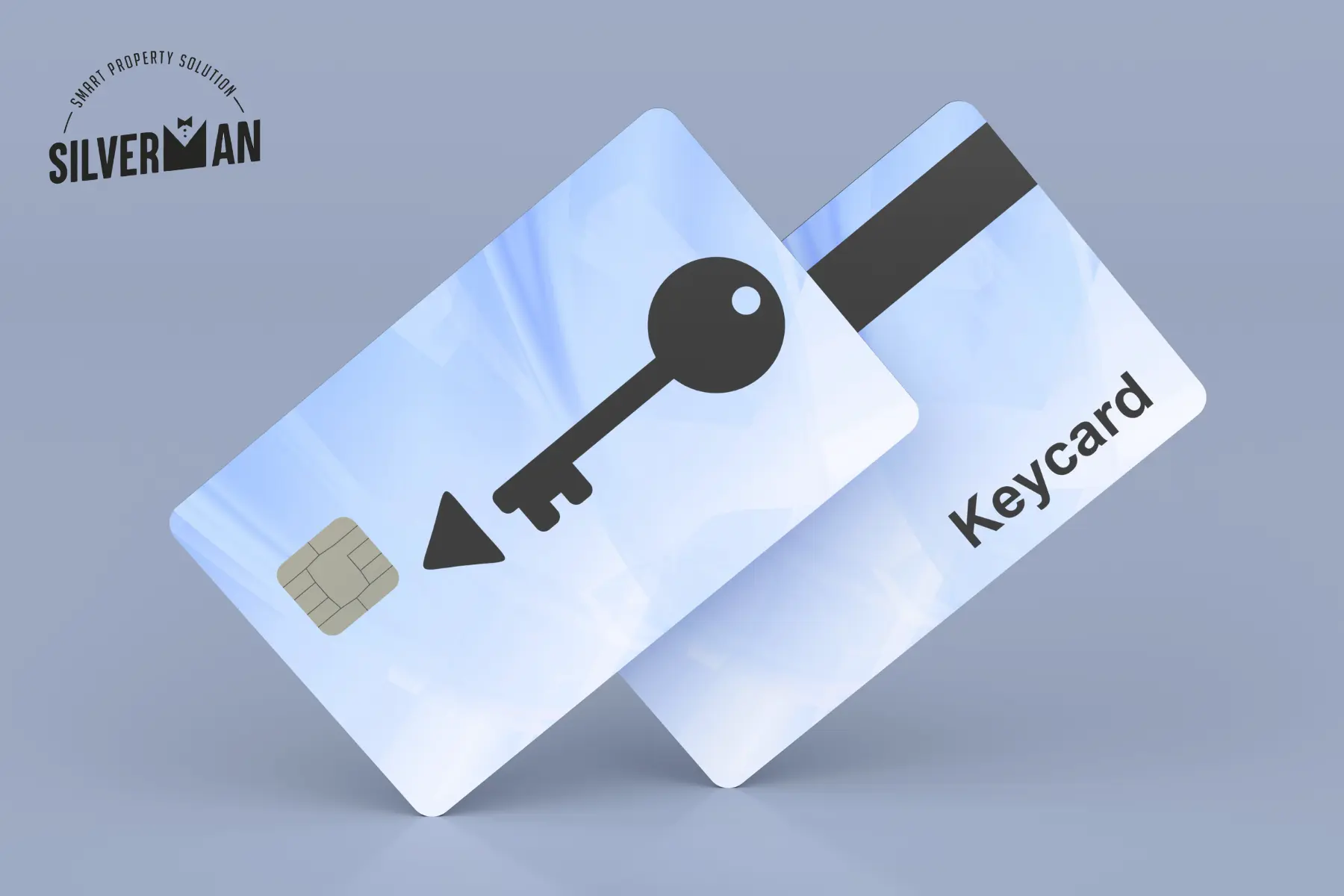
A key card is a type of electronic device that operates via RFID (Radio Frequency Identification) waves. The most common form is a rectangular card about the size of a credit card, covered in opaque white plastic, though nowadays it has also been developed into various Key Tag designs. The purpose of a key card is to provide security for entry-exit systems in various areas, such as tapping to open a room door in hotels with a hotel key card system, or tapping to enter and exit office buildings, where in some places it is even printed to double as an employee card. Currently, door key cards are divided into 2 types:
- Proximity Card key cards — available in a thin 0.8-meter size, a thick 1.8-meter size, and as a Key Tag, used with standard card readers
- Mifare Card key cards — available in both a thin 0.8-meter size and a thick 1.8-meter size, used exclusively with 13.56 MHz readers; they don't need to be pressed directly against the reader and can transmit data at a range of up to 10 centimeters
Now, when it comes to the question of how secure key card systems really are, it must be confirmed that they provide excellent protection for controlling who enters and exits, because if the other party doesn't have a key card to open the door, they simply cannot open it or pass through that entry point at all.
What are the penalties for key card cloning?
Although room key card systems offer a high level of security, it must be acknowledged that criminals, scammers, and other bad actors often look for ways to clone key cards in order to enter residents' rooms. This constitutes key card counterfeiting, which carries clear legal penalties, since door key cards fall under the category of electronic cards — documents that store recorded data or codes. The legal penalties can be summarized as follows:
- Forgery, or making tools used for forgery: 1-5 years imprisonment, a fine of 20,000-100,000 baht
- Importing or exporting counterfeit cards or forgery tools: 3-10 years imprisonment, a fine of 60,000-200,000 baht
- Possessing or using a card while knowing it is counterfeit: 1-7 years imprisonment, or a fine of 20,000-140,000 baht, or both
- Selling or possessing counterfeit cards for sale: 1-10 years imprisonment, or a fine of 20,000-200,000 baht, or both
- Possessing another person's card in a manner likely to cause them harm: up to 3 years imprisonment, or a fine of up to 60,000 baht, or both
- Using another person's card in a manner likely to cause them harm: up to 5 years imprisonment, or a fine of up to 100,000 baht, or both
 What should you do if your key card is cloned?
 Even though clear penalties exist for those who copy key cards, some people still try to clone them for their own benefit. So if you are unfortunate enough to have your key card cloned, what you need to do is report it to someone who can look after the issue or provide initial assistance, such as the condominium juristic person, the housing estate juristic person, or hotel front desk staff, so they can resolve the problem by hiring a key card duplication shop to reprogram new key cards and adjust the room key card system so that the door can no longer be opened using the old access code. After that, you should file a police report to reduce the risk of harm to yourself.
How can you prevent key card cloning?
 To reduce the risk of having your key card copied, learning the right prevention methods can help lower the risk of this happening to you and those around you. Let's look at what you should do if you're someone who needs to carry a dormitory, condo, or hotel key card with you at all times.
1. Add a watermark to the card
In case the driver's face is needed as evidence, or other additional details of the vehicle such as make, model, and color, this level of camera can excellently record all the information for every vehicle.
2. Switch to a facial recognition system instead
If you're worried that your condo, room, apartment, or office key card could be cloned, consider recommending that the property owner or manager switch to an AI Facial Recognition & Access Control Management System instead, as it offers a high level of security and prevents outsiders from gaining entry. Silverman is ready to install an AI-powered facial recognition and automated access control system that makes entry and exit smooth and secure for every area. Our system can recognize and process a face in less than 0.02 seconds, making it fast and reliable. You can also use this system to control elevator access, as it only allows authorized individuals to use the elevator. Our system works with condominiums, condominium buildings, hotels, resorts, residences, offices, and more.
3. Change access codes frequently
As a hotel or resort owner, or even as a condo resident, changing the scan code used to enter and exit via the card on a regular basis is another effective method worth considering. It prevents criminals who manage to copy a card from being able to use data from the old card, further boosting security.
4. Always keep your key card with you — never leave it lying around
When you need to go out or run errands, it's recommended that you always carry your key card with you. Most importantly, keep it somewhere secure so it doesn't get lost, for your own peace of mind — for example, tucking it into the credit card slot of your wallet. Without the original card, criminals have nothing to copy.
5. Add extra layers of complexity
If you're worried that criminals might take your card to a key card duplication shop to have it copied, it's worth adding an extra layer of complexity to your room's entry system — for example, installing an additional padlock or chain, or adding a repeat iris or fingerprint scan. Even if someone manages to unlock the key card, criminals still won't be able to get into the room.
 It must be acknowledged that key card systems offer a high level of security in use, but there are still many scammers who try to copy key cards for their own personal gain, despite it being against the law. So if you live in a condo, dormitory, or apartment, or are staying at any hotel that uses this kind of system, you should stay vigilant. Or, if you're a property manager or project owner looking to upgrade entry and exit security for your area — such as adding an iris scan system or a fingerprint scan system — both of these options are equally worth considering, and Silverman's services cover them all, because we are the full-service developer of every type of electronic system, from AI facial recognition systems, juristic person management systems, and accounting, to parking management systems and AI License Plate Recognition systems, and much more. We are ready to deliver reliable service to a standard you can trust. Contact us today




Download Application


Contact us for more information


Add-On services
- E-meeting (e-AGM)
- Visitor Control Management and Parking lot control
- Security Systems and License Plate Recognition (LPR)
- AI Facial Recognition & Access Control Management System
- Automatic Debt Collection System and Legal Services
- Incorporation services and project assignments
- Accounting As A Service
- Audit As A Service
Connect with us
- Management & Accounting program
- E-meeting (e-AGM) and E-vote
-



Member of


Certified by


Awarded by

Accounting and Finance
Juristic Person Management
Property Management Services
Accounting Software for Juristic
Management Software for Juristic
Read More