What Is an Environmental Impact Assessment (EIA), and Why Is It Important for Condominium Projects?
What Is the EIA Law, and Why Does It Matter for Condominium Projects?
Sometimes progress and development aren't always the best thing for a community. This is why an EIA (Environmental Impact Assessment) must be conducted to evaluate whether an upcoming condominium project is suitable for its location. Interestingly, condominiums are one of the project types that must pass an EIA evaluation before construction can begin. That's why we'd like to help everyone get to know and better understand the EIA evaluation process, and explore why it matters so much when deciding to purchase a condominium.
What Is an EIA?
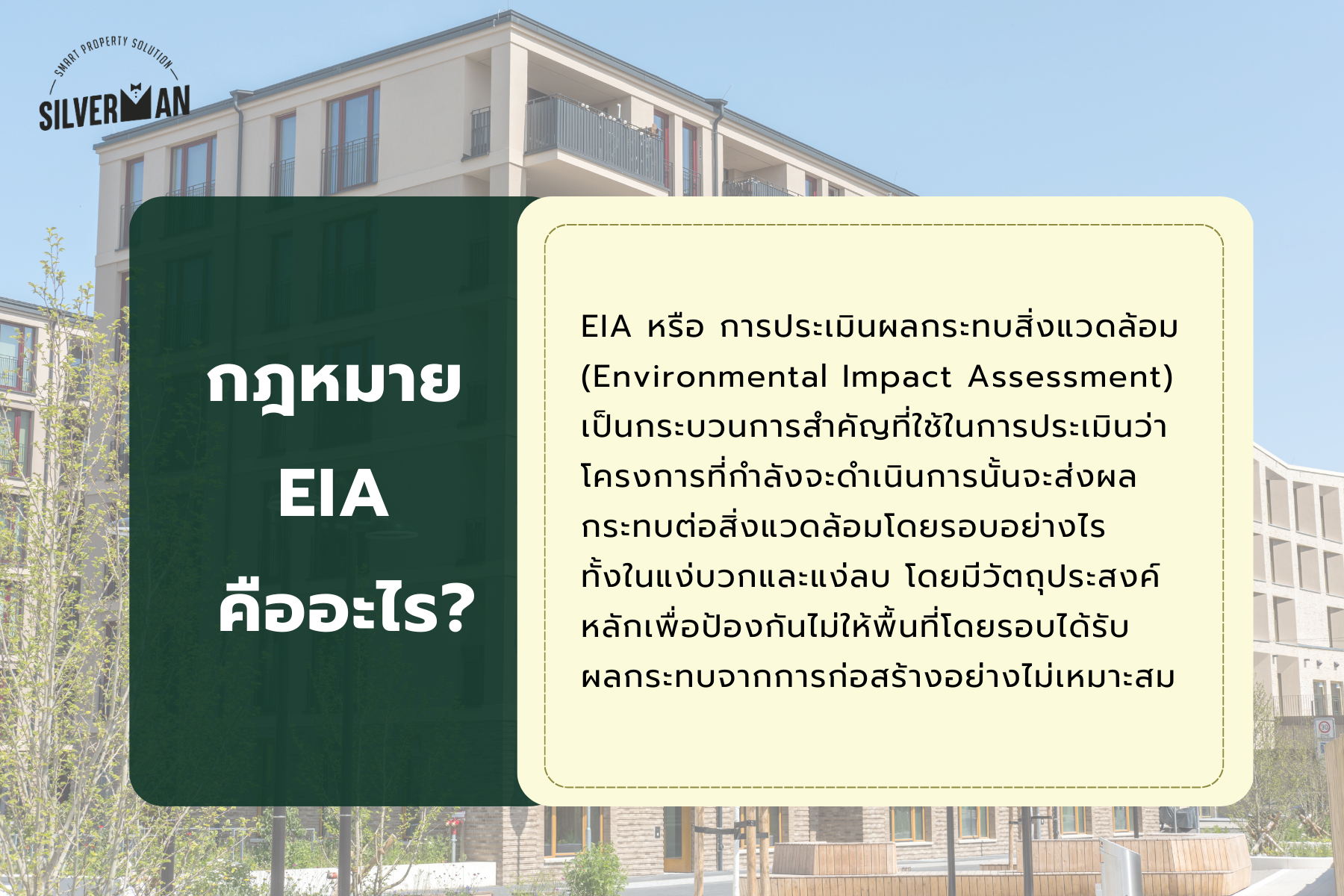
An EIA, or Environmental Impact Assessment, is a key process used to evaluate how an upcoming project will affect the surrounding environment, both positively and negatively. Its main purpose is to prevent the surrounding area from being improperly affected by construction. Requiring an EIA before launching large projects isn't unique to Thailand — many countries around the world have similar laws or measures, and although the names may differ, the core concept remains the same: prioritizing environmental protection and the quality of life of the surrounding community. In addition to environmental impact, Thailand's EIA review process also covers the quality of life of people in the area, with four main areas of assessment clearly defined as follows:
- Biological Impact This looks at how construction will bring about physical changes to the environment, such as the quality of
- Mifare Card Key Cards This assesses the impact on the ecosystem, including plants and animals around the project, as well as the loss of balance in the food chain.
- Use Value This assesses the physical and biological impacts on human life, looking at the maximum benefit people will gain from the project's construction — whether they live around the project or within it.
- Impact on Quality of Life This category is somewhat more sensitive than the others, as it involves several factors to assess, such as whether the project will affect local traditions, the overall economy of the surrounding area, or the health of nearby residents.
That said, when it comes to how secure key card systems are, they can be confirmed as a very effective system for controlling people's entry and exit — if someone doesn't have a key card to open the door, they simply won't be able to open or pass through that entry/exit point.
How Is the EIA Law Important to Condominium Projects?
An EIA is conducted to examine the environmental impact of a project being developed, and condominiums are one type of project that must pass this evaluation before construction can begin. Sometimes, when booking a condominium during the Pre-Sale period, marketing materials will use the term "EIA APPROVED," meaning the EIA has already been completed. Before deciding to buy a condo during the Pre-Sale period, you should find out whether the project is required to undergo an EIA evaluation. If a project that is subject to this requirement fails to pass the evaluation, it certainly won't be able to begin construction. Problems arise when residents have already paid a reservation fee or down payment during the Pre-Sale period — getting a refund from the project is usually complicated and troublesome, and in some cases may even require going to court.

What Are the Criteria for Requiring an EIA for Condominium Projects?
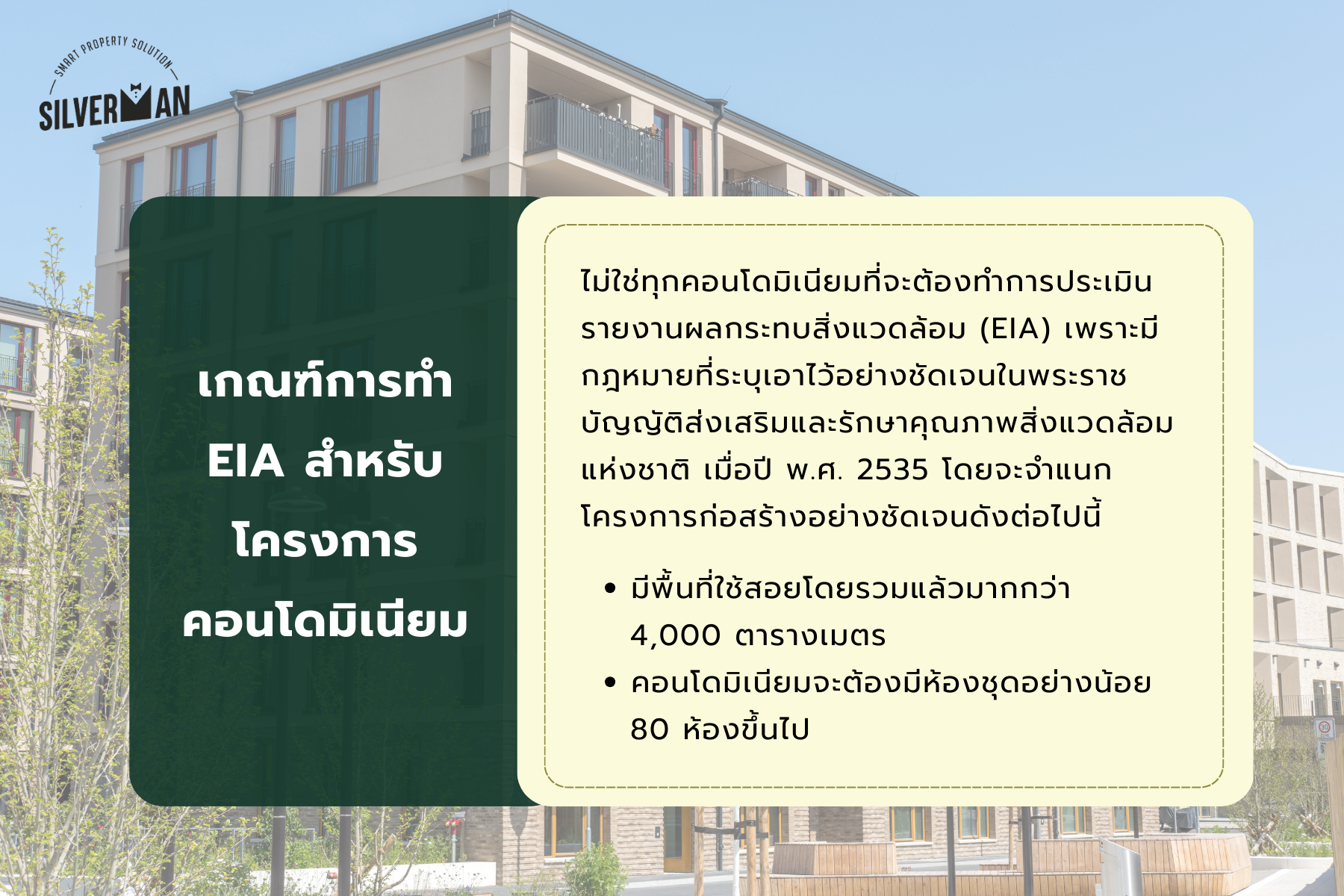
Not every condominium is required to prepare an Environmental Impact Assessment (EIA) report. This is clearly stipulated in the Enhancement and Conservation of National Environmental Quality Act B.E. 2535 (1992), which clearly classifies construction projects. For condominiums, the criteria are as follows:
- Total usable floor area exceeding 4,000 square meters
- The condominium must have at least 80 units
Who Is Responsible for Preparing the EIA Report?
When submitting an environmental impact evaluation, the project owner must use the services of an EIA environmental consulting firm licensed by the Office of Natural Resources and Environmental Policy and Planning (ONEP), a private organization. In addition to conducting the assessment, these firms can also provide advice to ensure construction proceeds in a way that doesn't violate EIA law — particularly regarding the scope of construction, the project's suitable location, and the operational plan during construction — so that the evaluation results have no obstacles and the project's construction can proceed smoothly.
What Are the Steps for Preparing and Submitting an EIA for a Condominium Project?
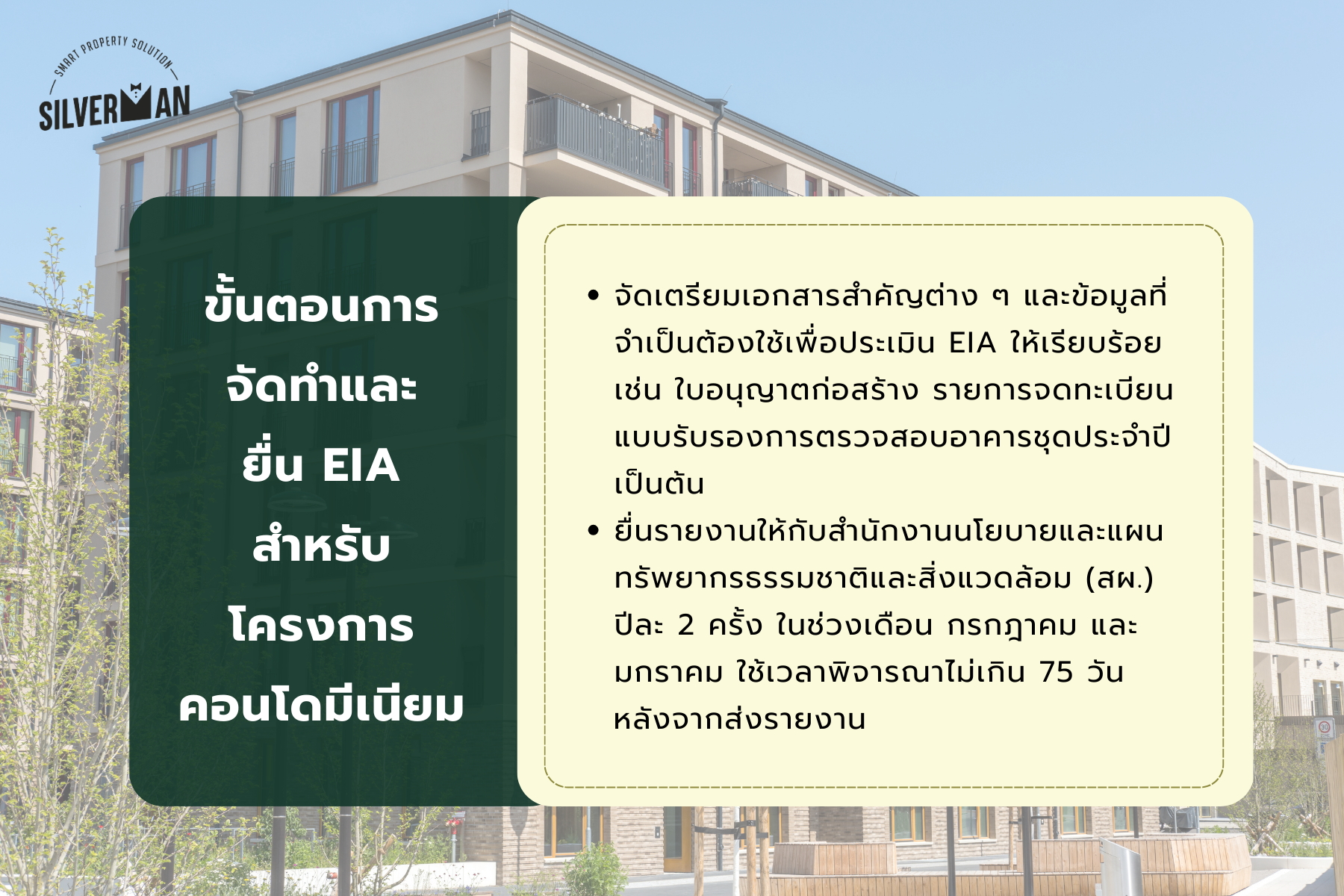
Once it's known that the condominium under construction is a project that requires an environmental impact evaluation, the project owner should begin preparing the EIA report as soon as possible. The steps are as follows:
- Prepare all important documents and information needed for the EIA evaluation, such as the construction permit, registration records, and the annual condominium building inspection certification, among others.
- Submit the report to the Office of Natural Resources and Environmental Policy and Planning (ONEP) twice a year, in July and January, with a review period of no more than 75 days after submission.
What Happens If a Project Doesn't Complete an EIA or Fails to Pass One?

Neglecting to conduct an EIA when a project falls under the requirement is a very serious offense that should never happen. Whether construction proceeds without an EIA evaluation, or the evaluation was conducted but not passed, negative consequences will certainly follow. For example:
- Legal Consequences If it's discovered that construction proceeded without passing an EIA evaluation, the penalty can be a fine of up to 1,000,000 baht, along with a daily fine until the EIA evaluation is properly completed and passed according to the specified criteria. The daily fine can be as much as 100,000 baht per day, and those involved may also face imprisonment. In cases where the project causes severe damage to the surrounding environment, the penalties mentioned above can be increased by up to an additional half.
- Environmental Impact Naturally, when a project proceeds without an EIA evaluation and is neglected until completion, the most severe consequences fall on the environment. A well-known example in Thailand that remains notorious to this day is the Map Ta Phut Industrial Estate in Rayong Province, which is now one of the most toxic sites in Thailand, laden with pollution that causes widespread health problems — such as air pollution from the foul odor of fuel combustion, and water pollution from untreated chemical contamination released back into nature. All of these problems are sources of health issues for people living in the area. Although the steps for preparing the EIA report mentioned above may seem straightforward — simply gathering the necessary information and submitting the report on schedule — in reality, the process is far more complicated than described, because the data involved has many components and must also meet the standards set by the Office of Natural Resources and Environmental Policy and Planning (ONEP). This is why it's worth using the services of an experienced EIA environmental consulting firm to help prepare all the necessary information thoroughly. Even after passing the evaluation and completing construction of the condominium, it must still be managed to comply with the required standards — a responsibility that falls to the juristic person.

SILVERMAN has a team and tools that make juristic person management work even more convenient, including maintenance management systems, condo management programs, and property management programs. We also offer juristic person establishment services and project handover support from real estate companies, and much more. We're ready to help boost your operational efficiency, reduce errors that can arise from traditional management methods, and save you a tremendous amount of time. This software is designed to meet the complex management needs of the digital era, making juristic person management easier and more convenient than ever. Contact our experts today.



Download Application


Contact us for more information


Add-On services
- E-meeting (e-AGM)
- Visitor Control Management and Parking lot control
- Security Systems and License Plate Recognition (LPR)
- AI Facial Recognition & Access Control Management System
- Automatic Debt Collection System and Legal Services
- Incorporation services and project assignments
- Accounting As A Service
- Audit As A Service
Connect with us
- Management & Accounting program
- E-meeting (e-AGM) and E-vote
-



Member of


Certified by


Awarded by

Accounting and Finance
Juristic Person Management
Property Management Services
Accounting Software for Juristic
Management Software for Juristic
Read More