What Is a Condominium Annual General Meeting (AGM)? Can You Skip It?
What Is a Condominium Annual General Meeting (AGM)? Can You Skip It?
When you decide to live in a condominium project, one thing every co-owner must set aside time for each year is the condominium's Annual General Meeting (AGM). For each project, the juristic person is responsible for setting the date and time and notifying co-owners in advance so they can prepare and plan accordingly. Today, we'll walk you through exactly what an annual general meeting is, and whether it's possible to skip attending if it's not convenient. Anyone living in a condo should know this!
What Is a Condominium Annual General Meeting?
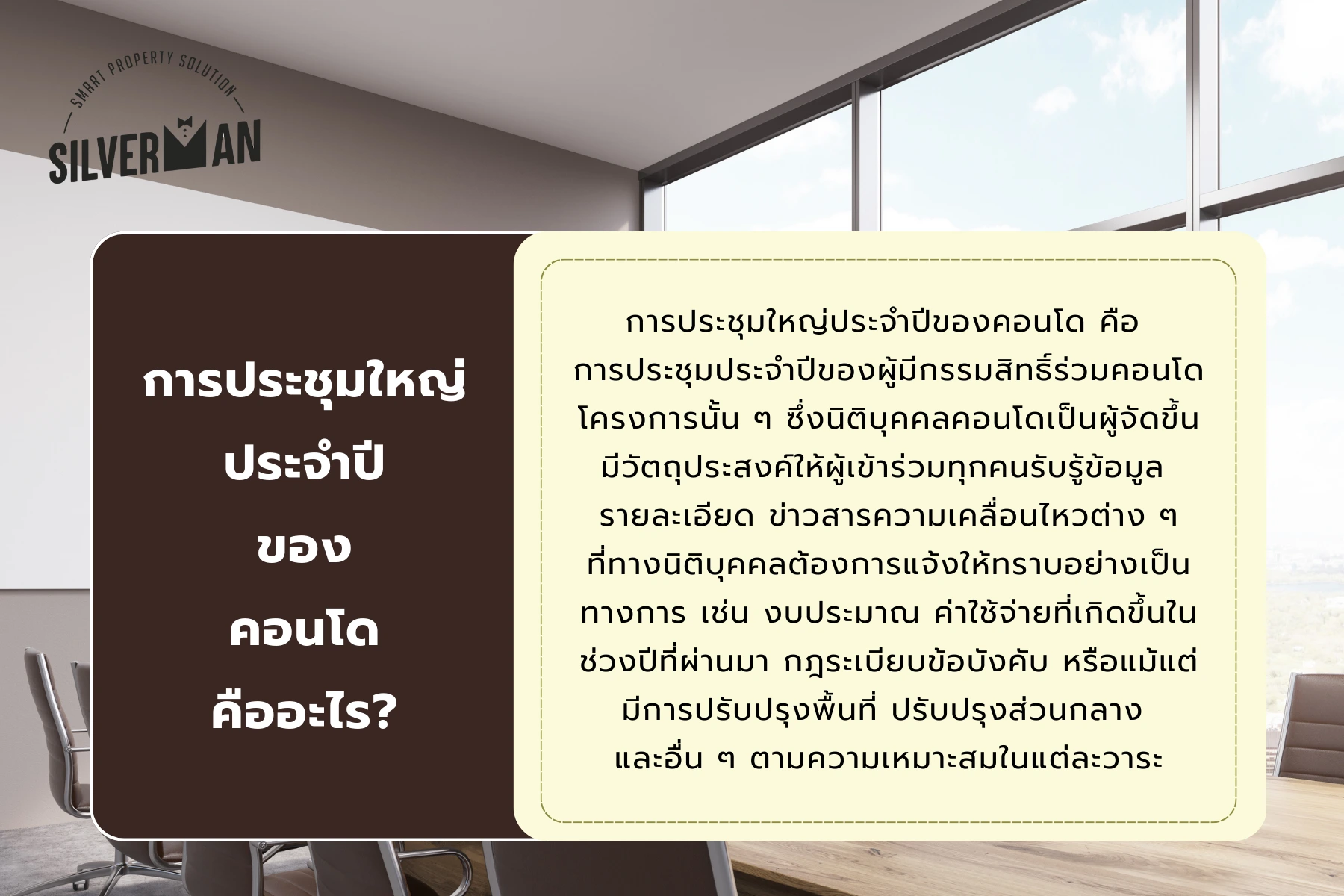 A condominium annual general meeting is the yearly meeting of the co-owners of a given condominium project, organized by the condominium juristic person. Its purpose is to ensure that all attendees are informed of the information, details, and news that the juristic person needs to officially communicate — such as the budget, expenses incurred over the past year, rules and regulations, or even renovations to common areas and other matters, as appropriate for each agenda. In short, the annual general meeting can be described as a gathering of stakeholders or co-owners of the condominium to receive information, share opinions, and even cast votes.
How Many Types of Condominium Meetings Are There?
 Condominium meetings can actually be divided into 3 types, each with a different main purpose, as follows:
1. The First Ordinary General Meeting
The first ordinary general meeting is the very first meeting of condominium residents, held to communicate the details, agreements, and rules of the condominium so that all residents can follow them together. This includes matters such as outsider access to the condominium, parking areas, common area operating hours, endorsing or appointing the manager and the condominium juristic person committee, reporting on the results of operations over the past year, and endorsing financial institution reports or other matters as deemed appropriate. This meeting must be held within 180 days, or 6 months, after the project transfers ownership of the first unit to a resident, so that the management of assets and the administration of the juristic person can proceed transparently and smoothly from the very start.
2. The Annual Ordinary General Meeting
The annual ordinary general meeting of a condominium building — sometimes also referred to as the annual ordinary general meeting of the condominium juristic person — is held to consider and approve the balance sheet, appoint the auditor, present the annual report, and cover other matters as appropriate. It must take place within 120 days after the end of the accounting period. This annual ordinary general meeting of the condominium building, or ordinary general meeting of co-owners, requires acceptance from no less than 1 in 4 co-owners in order for the meeting to be held.
3. The Annual Extraordinary General Meeting
The extraordinary general meeting is a meeting of condominium residents held to consider urgent matters or situations that require a meeting to be convened quickly to reach a conclusion. To hold such a meeting, approval must be obtained from more than half of the manager and the juristic person committee, along with approval from at least 20% of the condominium co-owners. Together, they then sign a written request to the committee asking for an urgent meeting to be held.
What Is the Difference Between an Ordinary and an Extraordinary Meeting?
 From the explanation above, we can now see the difference between ordinary and extraordinary meetings fairly clearly. The ordinary general meeting takes place every year, within 120 days after the end of the accounting period, and its main purpose is to consider and approve the balance sheet and the annual report, requiring acceptance from no less than 1 in 4 co-owners. The extraordinary general meeting, on the other hand, only takes place when there is an urgent matter that needs to be resolved through a meeting, requiring approval from no less than half of the manager and juristic person committee, along with approval from no less than 20% of the co-owners in the project, who sign a written request to hold the meeting.
What Are the Benefits of Condominium Meetings?
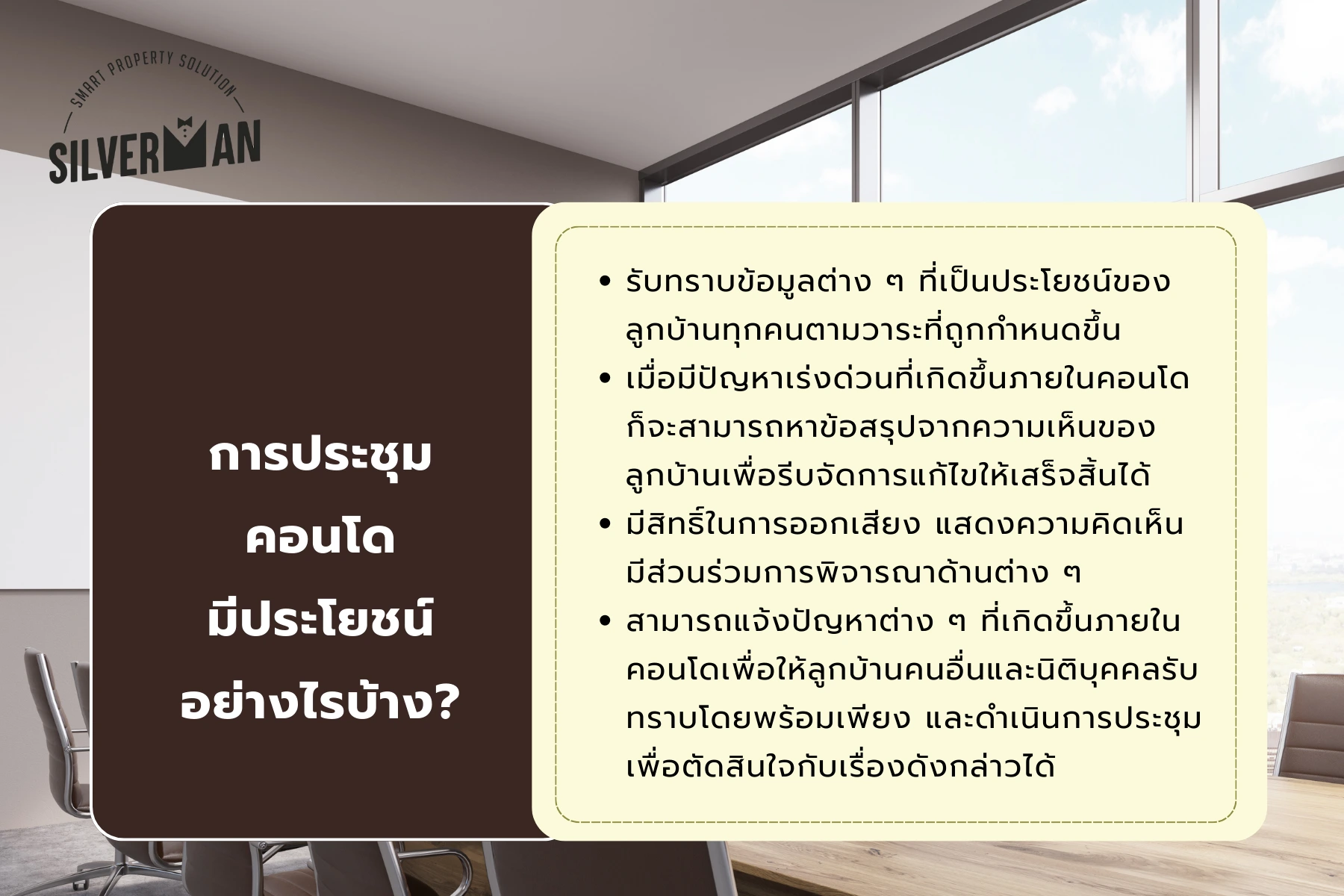 Looking at the bigger picture, condominium meetings are similar to housing estate juristic person meetings or the annual ordinary general meeting of a housing estate juristic person, where residents must take part in the meeting to hear the information the condominium juristic person wants to communicate. There are several benefits to this, as follows:
- Staying informed of information that benefits all residents, whether related to finances, rules and regulations, or other matters on the agenda.
- When an urgent problem arises within the condominium, a conclusion can be reached based on residents' opinions so the issue can be resolved quickly.
- The right to vote, express opinions, and take part in decisions to establish or remove the juristic person, as well as consideration of various matters, especially budget-related issues.
- The ability to raise any problems occurring within the condominium so that other residents and the juristic person are made aware together, and to hold a meeting to decide on such matters.
Tips for Preparing Before Attending a Condominium Meeting
 For co-owners preparing to attend any type of condominium general meeting, being well prepared — especially when you want to express an opinion or share information — will make your points more compelling, since you'll have the information ready and can even add such matters to the agenda. We recommend preparing as follows:
- Gather details on any matters you want to raise an opinion about or want to inform the meeting of.
- Plan your schedule in advance so you have time available for each condominium meeting, to avoid losing your rights on various matters.
- Study additional information on matters that require a vote or resolution, for the greatest benefit to yourself and all residents.
What Happens If You Don't Attend the Meeting?
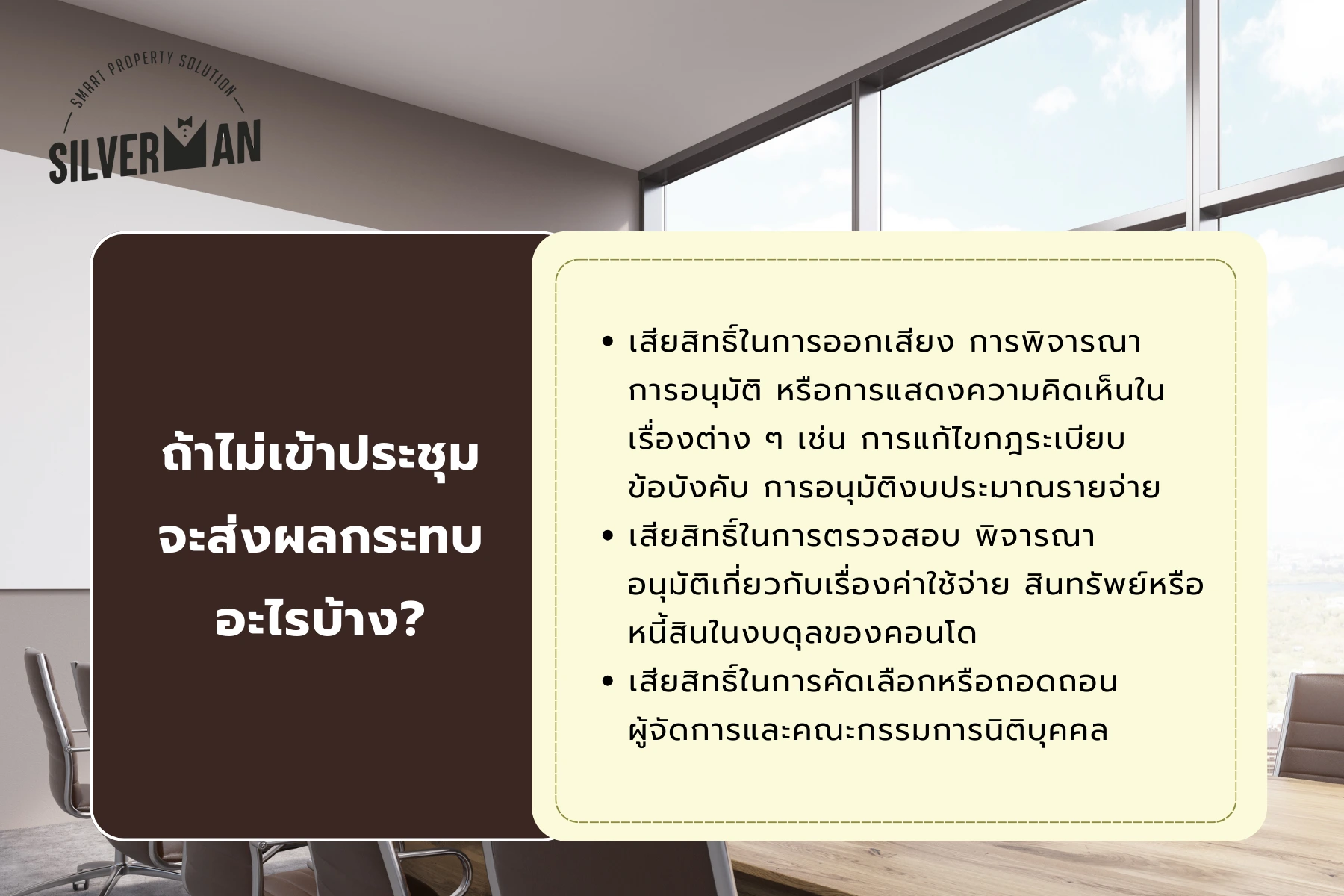 One of the duties of a resident or co-owner is to attend meetings whenever the condominium juristic person announces a schedule. In theory, if enough other residents accept the invitation to meet the required number, or approval has already been granted by the manager and the condominium juristic person, you as a co-owner may not be required to attend. However, there are still a fair number of ways this could affect you, including:
- Losing your right to vote, deliberate, approve, or express opinions on matters such as amendments to rules and regulations, approval of next year's expense budget, or the budget for renovating common areas.
- Losing your right to examine, consider, and approve matters related to expenses, assets, or liabilities on the condominium's balance sheet.
- Losing your right to select or remove the manager and the juristic person committee.
- Potentially wasting other residents' time if a quorum is needed for a matter requiring approval from more than half of residents, or if some residents who took the time to attend the meeting must have it postponed due to low turnout — not to mention needless expenses such as document costs, venue arrangements, or other administrative costs.
Regardless of its type, a condominium's annual general meeting is always important. As a co-owner or resident, you should plan ahead and be prepared to set aside the time to attend, so that you don't lose your rights to vote, deliberate, approve, or express your opinions.
 That said, to prevent the problem of residents not attending meetings, the juristic person can switch to an online meeting format simply by using the electronic general meeting system from Silverman. Every resident can join the meeting, review information, express opinions, and cast votes on resolutions in a fully legally compliant way, even without being physically present at the condominium during the meeting. Silverman's electronic general meeting system also comes with a system that consolidates votes from every channel fairly and accurately, with no duplicate voting, full traceability, and instant results — making it a great option that every juristic person should consider using. Our service also comes with a juristic person application packed with useful features, such as an automatic slip verification system powered by AI technology to reduce the workload of juristic person staff, an automatic accrual-based average income calculation system, an automatic debt collection reminder system, and more — all designed to make the juristic person's work more convenient, easier, and faster. If you're interested in our services, feel free to contact our team for a consultation today, at no cost.


Download Application


Contact us for more information


Add-On services
- E-meeting (e-AGM)
- Visitor Control Management and Parking lot control
- Security Systems and License Plate Recognition (LPR)
- AI Facial Recognition & Access Control Management System
- Automatic Debt Collection System and Legal Services
- Incorporation services and project assignments
- Accounting As A Service
- Audit As A Service
Connect with us
- Management & Accounting program
- E-meeting (e-AGM) and E-vote
-



Member of


Certified by


Awarded by

Accounting and Finance
Juristic Person Management
Property Management Services
Accounting Software for Juristic
Management Software for Juristic
Read More